OUR BAJA
The Sound of Our Heritage

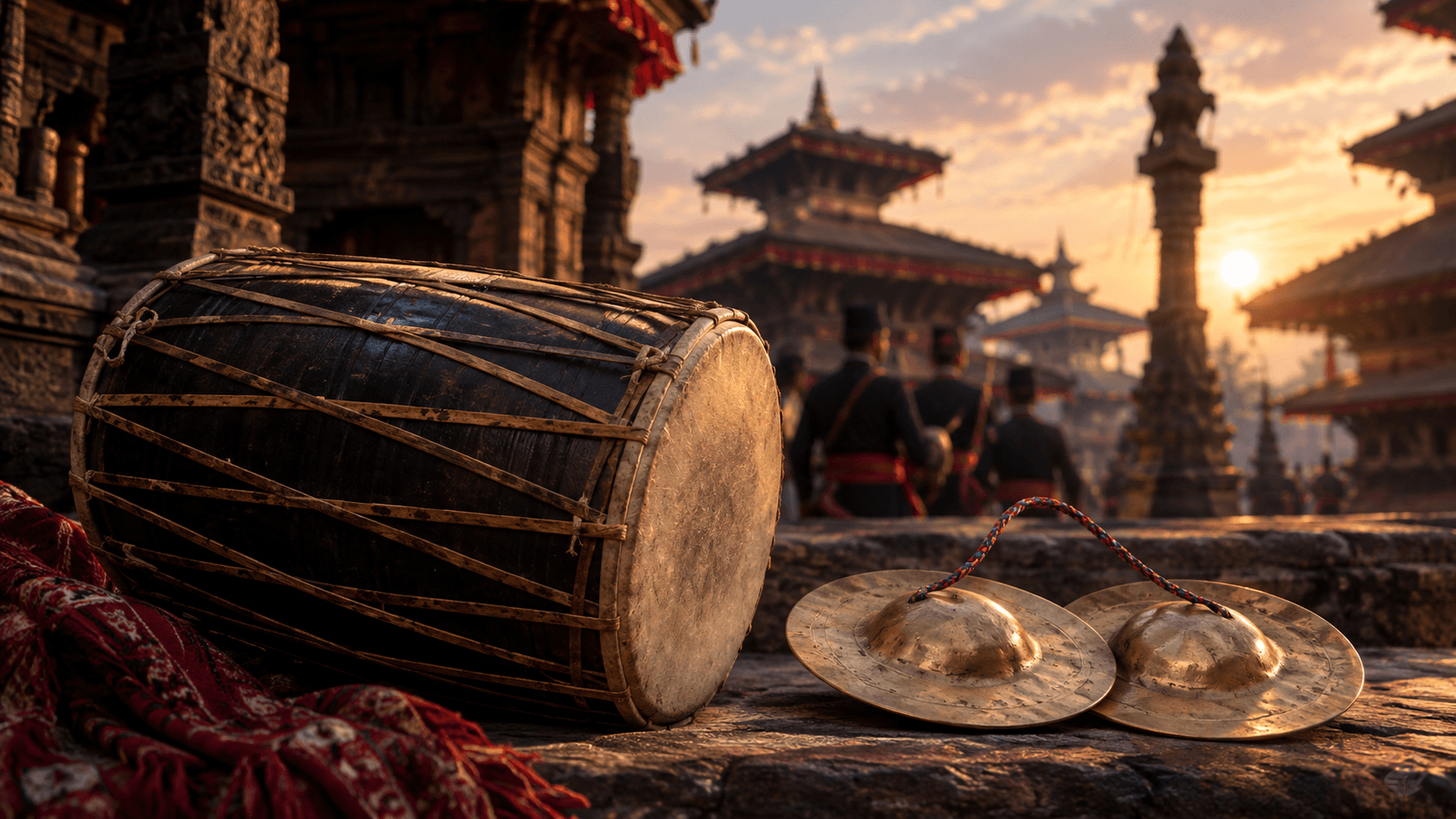
Dhime
Dhime is one of the most iconic traditional percussion instruments of Newa culture, deeply woven into the festivals, rituals, and communal life of the Kathmandu Valley.
Traditionally played with sticks, the Dhime produces a distinctive deep bass tone alongside sharper rhythmic beats. Its powerful sound is not merely musical—it carries the energy and spirit of the community, bringing people together during important cultural occasions.
For generations, Dhime has been passed down through communities and musical traditions, serving as an important expression of Newa identity. Today, it continues to be played during festivals and jatras, while also finding its place in cultural performances and efforts to preserve traditional Newa music.

Basuri
Basuri is a traditional bamboo flute known for its gentle, melodic sound and its place in the musical traditions of the Newa community.
Made traditionally from bamboo, the instrument produces sound through carefully placed finger holes and the player's breath. Its simple construction reflects the beauty of traditional craftsmanship, while its music carries a sense of warmth, emotion, and cultural identity.
Within Newa musical traditions, the Basuri can complement percussion ensembles and contribute melodic passages during cultural performances, festivals, and community gatherings.

Bhusya
Bhusya is a traditional pair of metal cymbals used in Newa Baja ensembles, known for its bright, sharp, and resonant sound.
Played by striking the two cymbals together, Bhusya provides rhythmic accents that complement the deep beats of instruments such as the Dhime.
Bhusya plays an important role in creating the energetic soundscape of Newa festivals, jatras, religious ceremonies, and processions. Its clear metallic tone helps maintain rhythm and adds intensity to musical performances.

Madal
Madal is a traditional double-headed drum widely used in Nepali folk music and also found in various cultural musical traditions.
The Madal is typically made with a hollow wooden body and two drumheads of different sizes, producing contrasting bass and treble sounds. It is played with both hands, allowing musicians to create intricate rhythms, accents, and dynamic patterns.
With its lively and expressive sound, the Madal brings energy to musical gatherings and performances while representing the enduring tradition of hand-played percussion in Nepal.